Onze trots!
Wij telen op onze locaties het ras Mediax, een middel-fijn tomaat die wij los oogsten. Deze tomaat is uitermate geschikt voor de sixpack verpakking. Door zijn grote en smaak is deze tomaat een ‘’must have’’ op elk broodje gezond, salade of lekker in de soep.
Cultivation
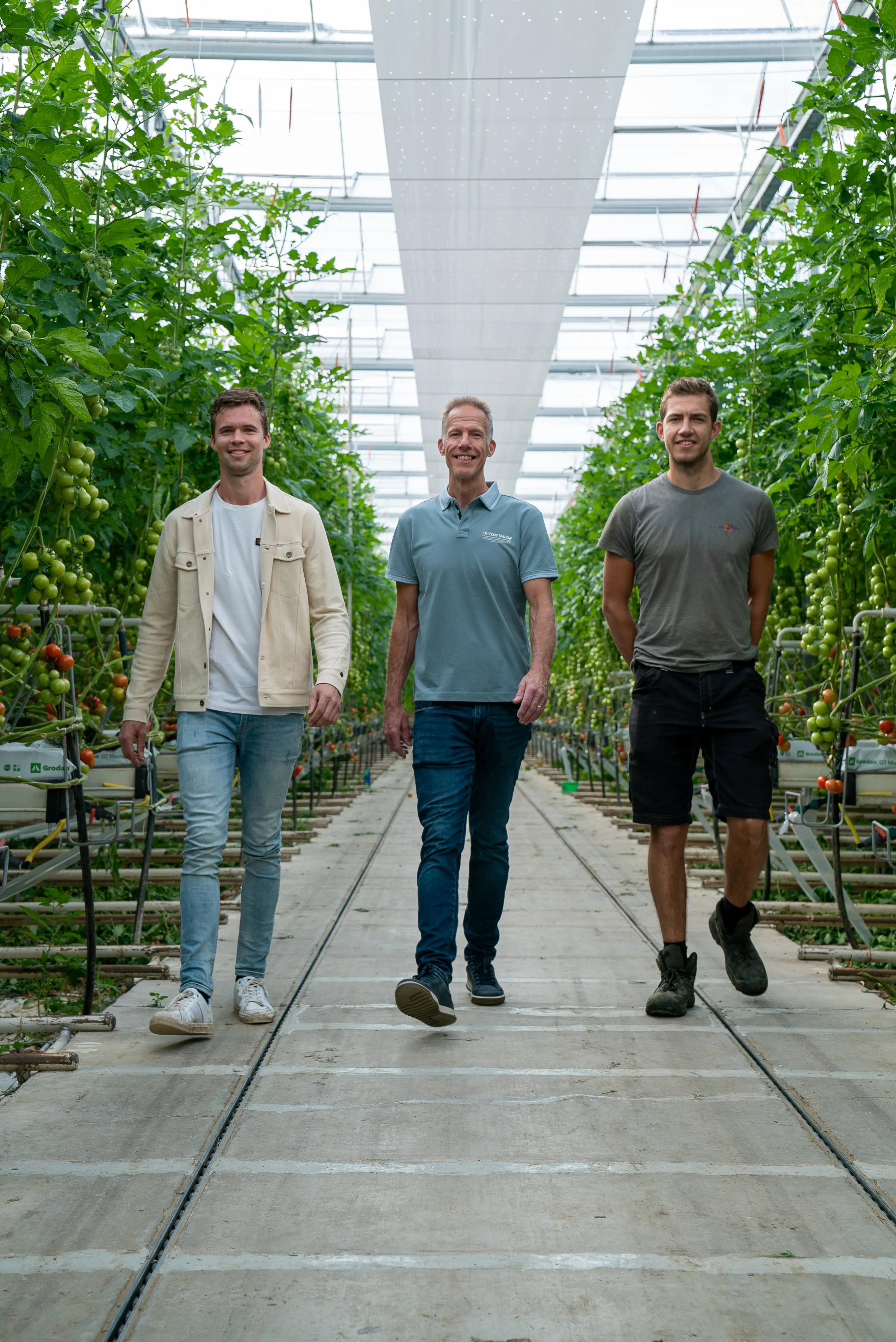
Our plants enter our greenhouses in November. Thanks to all the elements of nature, the first tomatoes are harvested from the plants in March. With great care, our cultivation staff harvests the best quality tomatoes until week 45. After this, the greenhouse is emptied, cleaned and prepared for the new crop! In summer, the crop grows up to 30 cm per week and therefore needs a lot of attention. With a nice group of people, we harvest our tomatoes twice a week to deliver the best quality.
Of course you should!
Thanks to our greenhouse bumblebees, all flowers are pollinated. In perfect symbiosis, the cultivator provides attractive flowers and the bumblebees give us delicious tomatoes. From January onwards, natural pesticides are deployed preventively, making it difficult for pests to take up residence in the crop. Biodiversity in the crop is therefore monitored every week and adjusted where necessary. A good balance between pests and natural enemies is essential.
Water of possibilities
At our sites, we use rain, drain, condensate and osmosis water during cultivation. This water is prepared in our 3-star restaurant before we give it to our plants. Healthy water is essential for healthy and resilient plants. The only water that leaves the farm is through the vents or in the tomatoes. 100% recirculation of water is what we stand for!
Hooghe beer water bank project
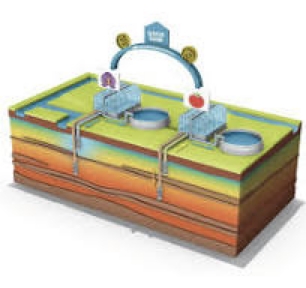
Together with other growers in the area, we are investigating storing excess rainwater underground and extracting it when water is scarce. This initiative allows growers to buffer more rainwater and less excess water enters the ditches, reducing the inconvenience experienced by water boards. Win, win situation you might say!
Nature’s heat
Solution-oriented and long-term thinking has resulted in us using geothermal heat in our greenhouses since 2018. Through a closed system, the hot water (87 degrees) is used in our greenhouses and the cooled water goes back to the underground. For flexibility, we also use our cogeneration generator. This generator switches on when there is a shortage on the electricity grid. In this way, we fulfil a social role, of which we are certainly proud. We use the residual heat and CO2 back in the greenhouse for the plants.

OCAP
For optimal growth of our plants, we dose extra CO2 between the crop. This is a residual product from the Port of Rotterdam. Thanks to the higher CO2 value in the greenhouse with lots of light, the photosynthesis process works more efficiently. This results in more assimilates in the plant and therefore a more resilient crop. Win-win!